The challenge: To preserve and promote our historical heritage through an immersive visual narrative
Alcoy Town Council
A local government committed to cultural innovation, heritage preservation and the modernisation of its tourism offering




Lorena Zamorano
Alcoy Councillor for Tourism

It is a way of recovering not only the physical heritage we have in the city, but also the intangible heritage that remains in those conversations and experiences from those times – which, were it not for these new technologies, we would be unable to recover.

The solution: Immersive 360° videos featuring real actors and integration via QR codes
We developed ‘Alcoi: A Journey into the Past’, a pioneering immersive experience comprising 360° videos rendered in the highest quality. The project stands out for its distinctive hybrid production approach: we combine hyper-realistic 3D virtual backgrounds of the historic centre, paper mills, steelworks and traditional markets with the integration of real local actors in period costume, bringing to life milestones such as the match-makers’ demonstration.
To make the experience fully accessible on the streets of Alcoy, we have placed QR codes at strategic locations around key points of interest. By scanning them, users gain access to immersive scenes where they can explore in all directions, experience the ambient sounds and interact with local history first-hand, transforming public spaces into an interactive open-air museum that has been successfully showcased at leading events such as FITUR 2025.
Top-quality immersive videos
Local contributors and talent involved
Freedom of vision in every historical setting
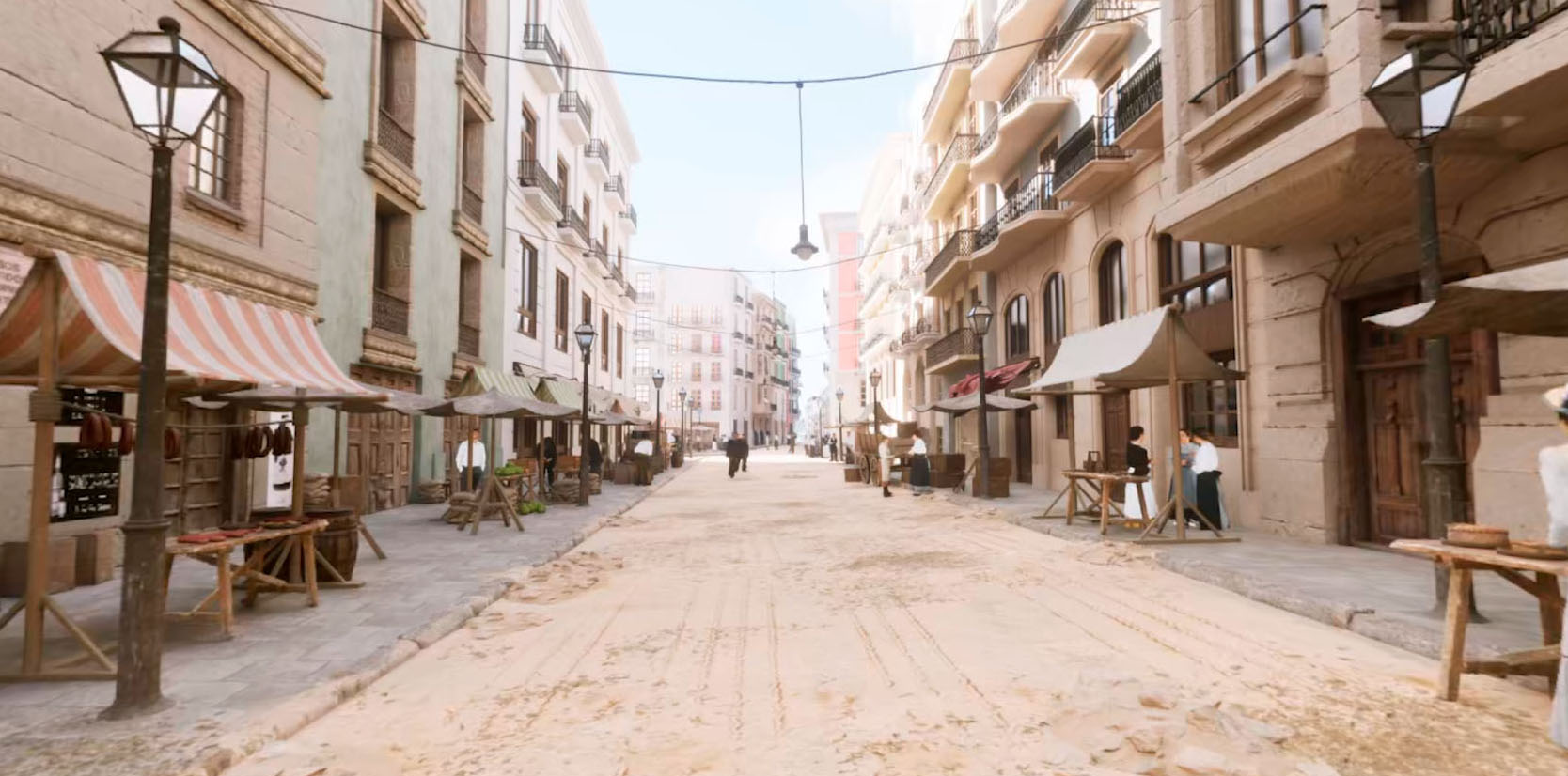
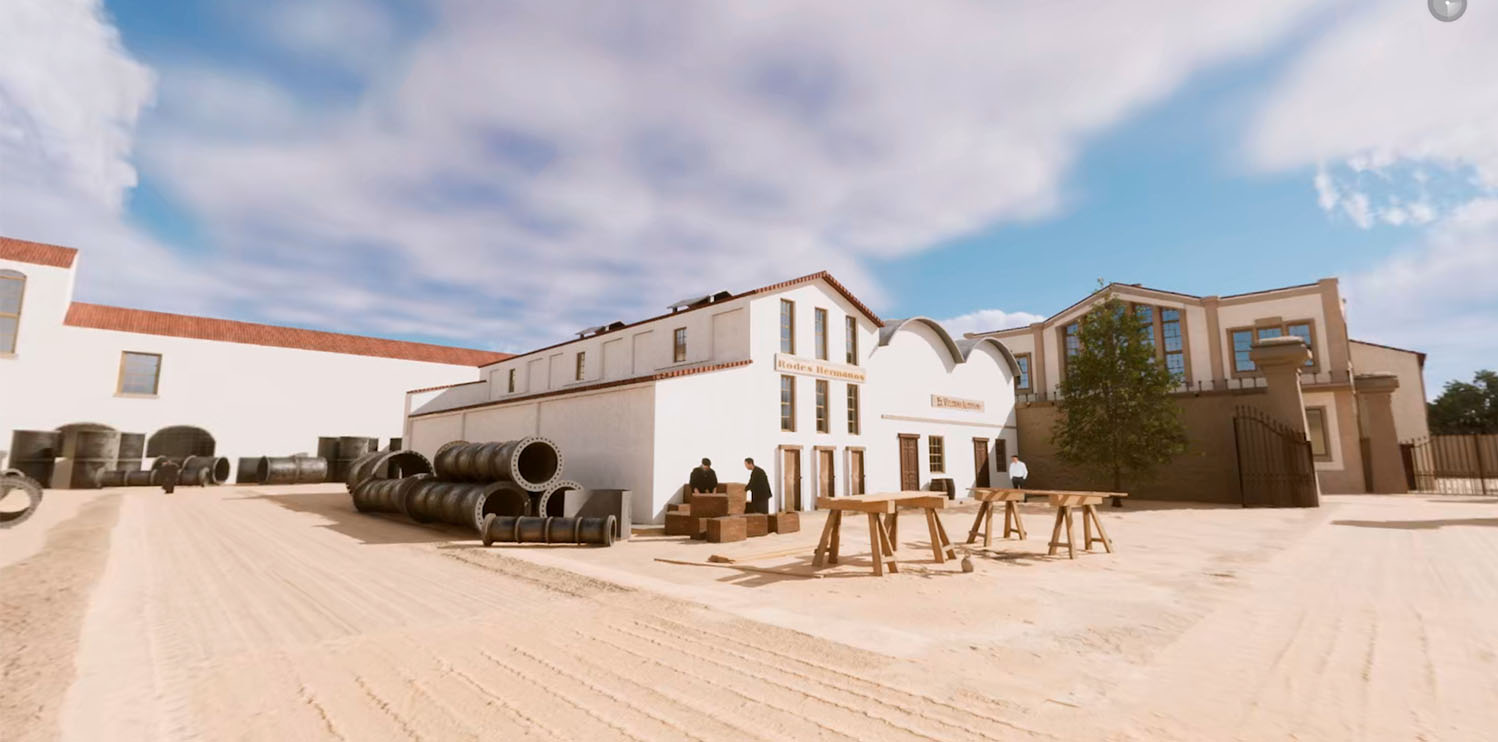
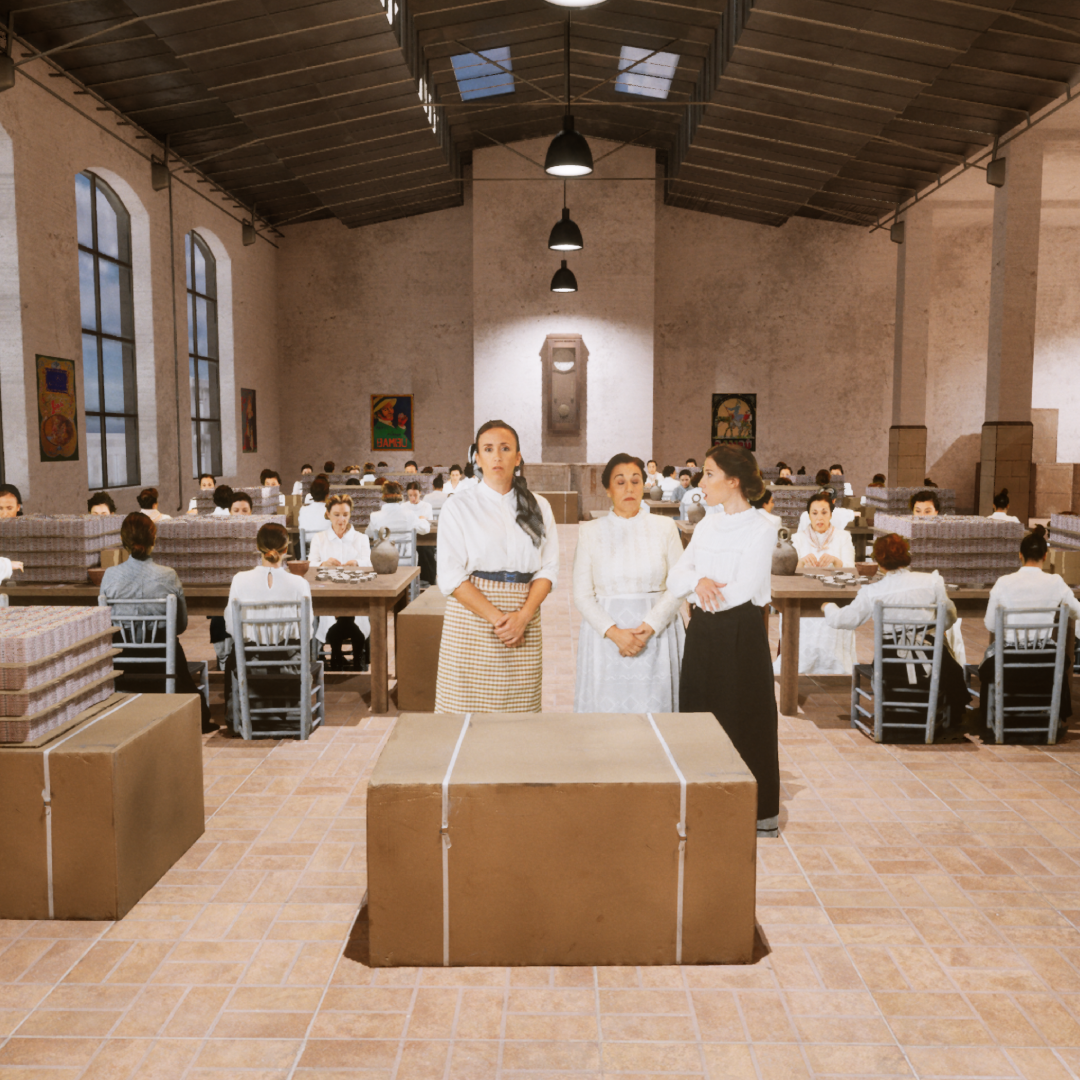
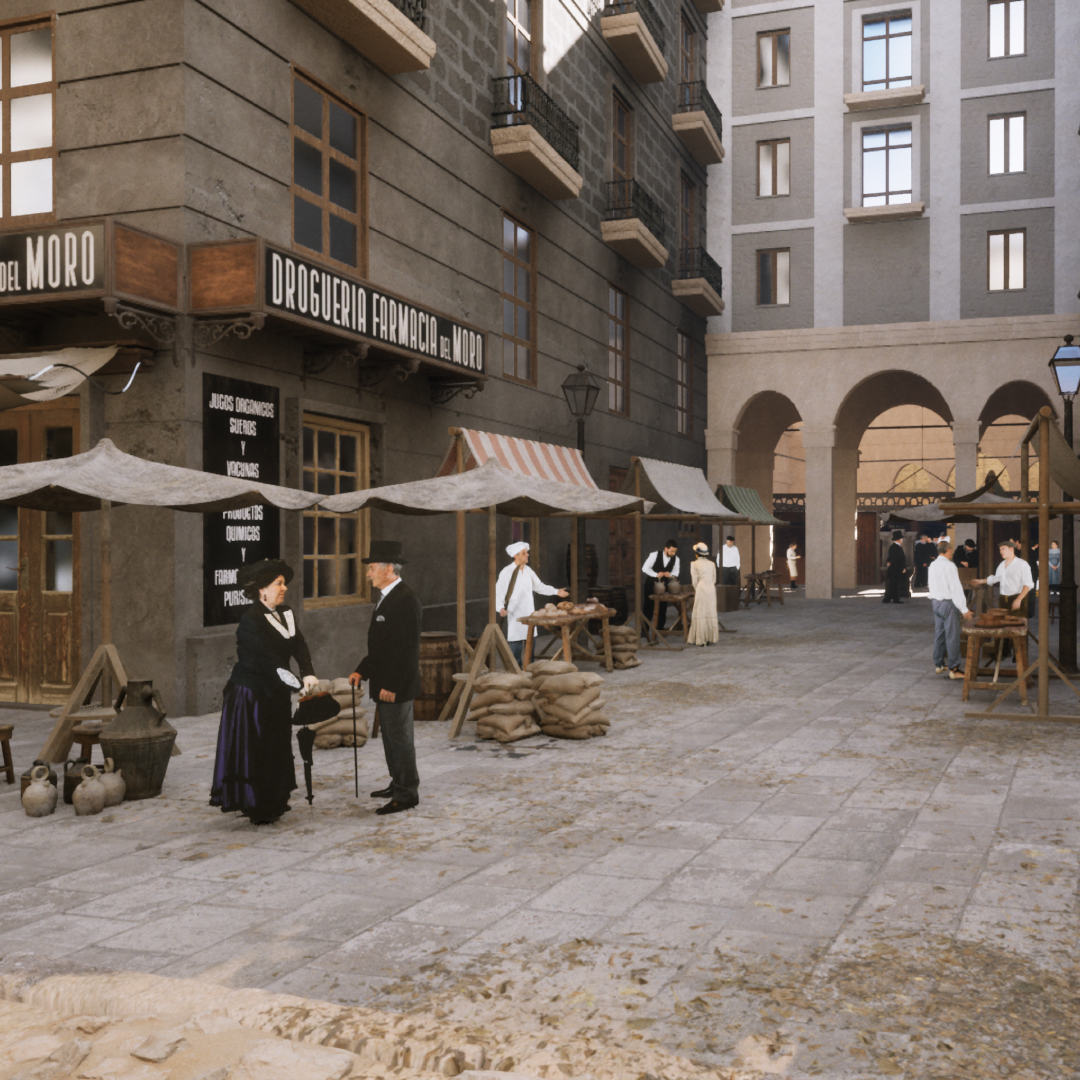

- 3D environments with lighting and spatial sound effects
- Incorporation of characters played by local actors in virtual historical settings
- Deployment of direct access points on public roads for immediate tourist enquiries
- Overarching storylines based on historical events and groups such as the matchgirls or the metalworking industry
Key findings
The project has marked a turning point in Alcoy City Council’s strategy for promoting tourism and cultural outreach. By presenting the initiative at FITUR 2025, the city generated significant media coverage and established itself as a leader in innovation within the cultural tourism sector, offering a unique experience that attracts new types of visitors and boosts the local economy.
Thanks to the integration of the digital environment with the public space, users not only learn about Alcoy’s paper-making and social history, but also form an emotional connection with its heritage. Universal accessibility via QR codes has democratised cultural tourism, creating an educational, engaging and enduring tool for both local residents and visitors.