
In an increasingly connected and digitalised world, immersive experiences have emerged as a key tool for transforming the way we interact with information, environments and even other people. In this article, we will take an in-depth look at the world of immersive experiences, their benefits and their application across various sectors.
What are immersive experiences?
Immersive experiences are those in which users can enter virtual or physical environments in an interactive, immersive and multisensory way. This type of experience uses advanced technologies, such as virtual reality (VR), augmented reality (AR) and mixed reality (MR), to create environments that go beyond the screen and allow the user to ‘live’ the experience. Rather than observing from the outside, the user becomes an active part of the environment, interacting with elements and other participants in real time.
The power of immersive experiences lies in their ability to make the user experience an environment as if they were actually there, breaking down the barrier between the digital and the real. This is achieved not only through 360-degree imagery or 3D recreations, but also through sounds, narratives and interactive elements that enrich perception and learning. From virtual museum visits to interactive tours of tourist destinations, immersive experiences are revolutionising sectors such as tourism, education, entertainment and marketing.
Benefits of immersive experiences in user interaction
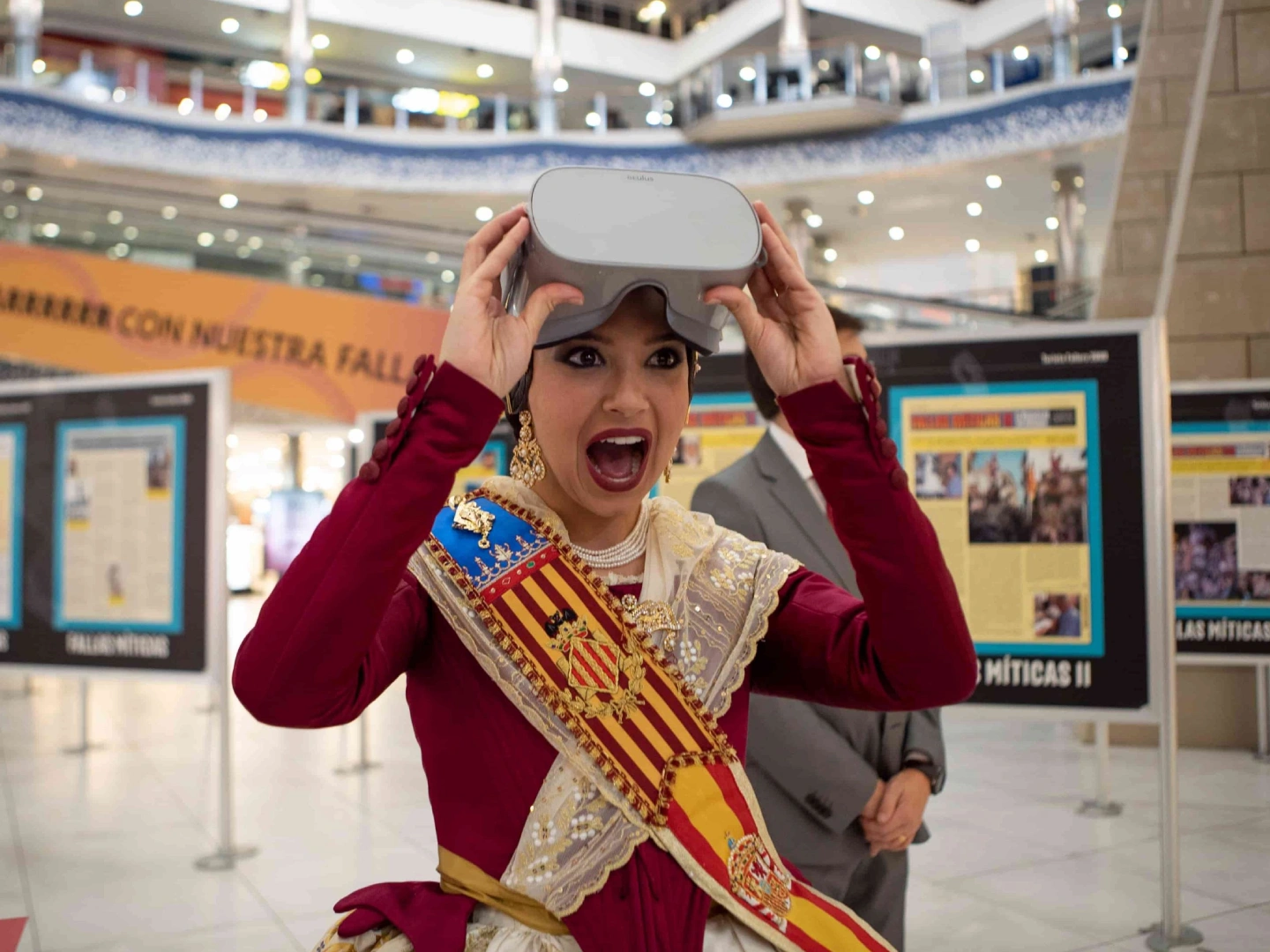
Immersive experiences are revolutionising the way users engage with content by facilitating a direct, multi-sensory and emotional connection. Rather than being mere spectators, users become active participants who can explore and interact with their surroundings, which enhances their level of engagement and their recollection of the experience.
Recent studies show that active immersion leads to up to 70 per cent greater retention of information compared with traditional methods.
As well as facilitating learning, immersive experiences also create a deep emotional connection. By offering visually and auditorily immersive environments, the user ‘lives’ the experience, which fosters empathy and emotional engagement. This is particularly valuable in tourism, where users can explore virtual destinations before visiting them, thereby connecting with the local culture and landscapes in a unique way. The ability to interact in real time with other participants also reinforces a sense of community, offering a shared experience that transcends the individual and creates a collective and enriching experience.
Immersive experiences applied to business and organisations
The potential of immersive experiences in the business world extends far beyond entertainment, offering innovative solutions for a wide range of sectors. Today, companies are harnessing virtual reality, augmented reality and mixed reality to create personalised experiences that enhance customer relations, optimise training and deliver more interactive marketing.
Immersiveness in marketing and tourism
In the tourism sector, immersive experiences have revolutionised the way in which users discover destinations before travelling. These experiences offer prospective travellers the opportunity to explore landscapes, culture and history virtually, immersing them in the place as if they were actually there. Thanks to its ability to evoke emotions and foster a genuine connection, immersive tourism not only informs but also inspires users to make the physical journey, by creating a meaningful bond with the destination before their visit.

Training and talent development
Companies also use virtual and augmented reality to develop more effective training programmes. Simulated environments enable employees to practise skills in a controlled and safe setting, which is particularly useful in sectors such as medicine, manufacturing and customer service. Immersive experiences allow real-life situations to be simulated, providing immediate feedback and enabling employees to adapt and improve continuously.
Innovation in design and prototyping
Virtual reality has also revolutionised product design and development. In the fields of architecture, the automotive industry and fashion, designers use immersive environments to visualise 3D prototypes, assess their functionality and make adjustments before physically producing them. This not only reduces costs, but also speeds up the development process and improves accuracy, as it enables potential errors to be detected at an early stage.
Success story: the immersive experience of the Grand Tour of Catalonia
At Innoarea Studios, one of our most notable projects is the immersive Grand Tour of Catalonia experience, created in collaboration with the Catalan Tourism Agency. This virtual reality experience, designed for the 2024 America’s Cup, invites users to embark on a virtual journey through Catalonia’s landscapes, history and culture.
The tour begins with a 3D map offering a panoramic view of Catalonia, highlighting its most iconic destinations. Throughout the experience, users can explore everything from the coast of Tarragona to the volcanic formations of La Garrotxa. The narrative is carefully crafted for each stop, allowing participants to immerse themselves in Catalan culture, from historic architecture to gastronomy.
This experience uses HTC VIVE Focus 3 headsets to provide a real-time, multi-user environment in which each participant is represented by an avatar, fostering natural interaction and encouraging virtual socialising. Furthermore, with support for six languages, the app is designed to appeal to an international audience, enabling users from all over the world to discover Catalonia in a way never seen before.

How are immersive experiences created?
At Innoarea, designing immersive experiences is a holistic process in which we combine creativity, cutting-edge technology and years of experience in interactive storytelling. For every project, we begin with a detailed analysis of the content and objectives, ensuring that every element and virtual environment connects with the user on a sensory and emotional level. Our team specialises in designing highly detailed 3D scenarios and real-time collaborative environments, in which users can explore and discover from an active and participatory perspective.
Our approach is to create experiences that are not only technologically innovative, but also fulfil the mission of taking digital interaction to the next level, where every user can feel, learn and connect. With this vision in mind, at Innoarea we continue to develop immersive experiences that connect people and enable them to explore the world beyond physical boundaries.