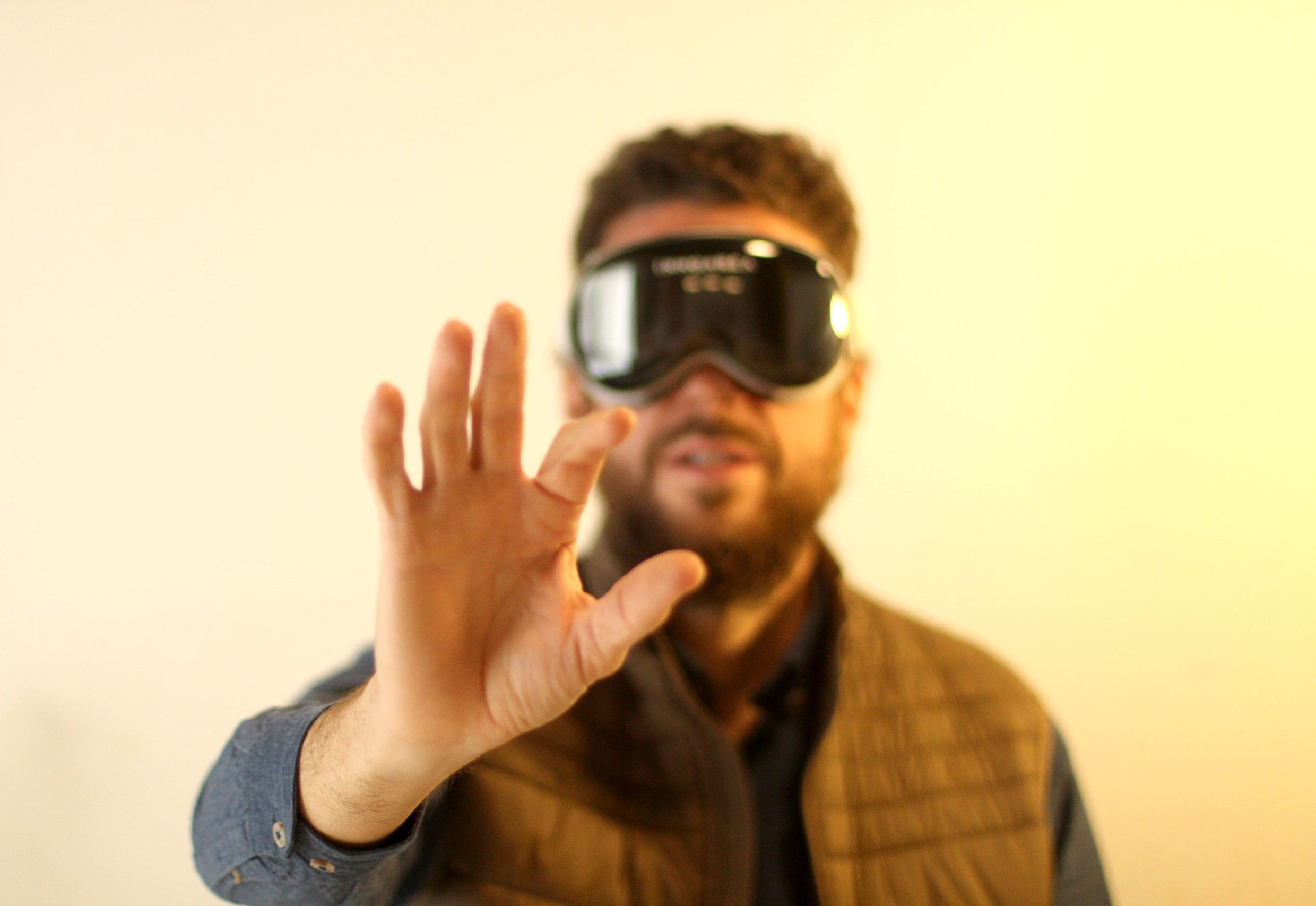
In an increasingly competitive and digitised world of work, technical skills are no longer enough. The ability to communicate effectively, resolve conflicts, lead teams and adapt to change has become a key factor for professional success. That is why soft skills training, supported by immersive technologies such as virtual reality, is revolutionising the way companies develop the talent of their teams, offering more effective, secure and measurable learning experiences.
What are soft skills?
Soft skills are personal and interpersonal skills that enable a person to interact and collaborate effectively with others. Unlike technical skills, which can be measured through specific knowledge or certifications, soft skills are linked to emotional intelligence, communication, creativity, leadership, and problem-solving abilities.
These skills are cross-cutting: they apply to any sector and any professional level, and are increasingly valued by companies seeking adaptable, innovative teams capable of meeting the challenges of modern work.
Why are soft skills important in the workplace?
In today’s workplace, technology evolves rapidly and processes are constantly changing. Soft skills enable professionals to:
- Communicating ideas effectively: avoiding misunderstandings and promoting collaboration.
- Teamwork and project leadership: building strong relationships and motivating the group towards common goals.
- Adapting to change: responding flexibly to new tools, processes or unforeseen situations.
- Resolving conflicts and making decisions: managing differences constructively and making informed decisions.
Companies that foster these skills not only increase productivity and employee satisfaction, but also create a more resilient and innovative work environment capable of effectively addressing market challenges.

Challenges of traditional soft skills training
Although soft skills are essential for professional success, traditional training faces multiple challenges that hinder their effective development. Most conventional programmes are based on face-to-face workshops, theoretical courses or seminars, which do not always manage to replicate the complexities of the real working environment. Among the main challenges are:
- Lack of practical immersion: It is difficult to create realistic situations in which participants can practise skills such as leadership, negotiation or conflict resolution without exposing themselves to real risks.
- Limited and subjective feedback: Feedback often relies solely on the instructor’s observations, which may be biased or interpretative, making it difficult to accurately assess individual progress.
- Insufficient learning retention: Studies show that much of what is learned in theoretical courses is forgotten within a few weeks if it is not reinforced with real-world practice.
- Difficulty scaling training: Training large teams involves high costs, complex logistical planning, and a lack of customisation for different levels or departments.
- Demotivation of participants: The lack of dynamic interaction and real-life scenarios can cause employees to perceive training as tedious or unhelpful.
These challenges highlight the need for more innovative learning methods that combine practice, immersion, and objective measurement to effectively develop soft skills.
Advantages of virtual reality in soft skills training
Virtual reality (VR) is emerging as a disruptive solution to the limitations of traditional training, offering an immersive and controlled environment where professionals can practise soft skills in a realistic and safe manner. Its main advantages include:
- Experiential and immersive learning: VR allows complex work scenarios to be recreated, such as presentations in front of an audience, difficult negotiations or conflict management, immersing the user in situations that require interpersonal skills to be applied in real time.
- Immediate and objective feedback: VR systems can record decisions, reactions and behaviours, providing clear metrics on each participant’s performance, which facilitates continuous and measurable learning.
- Safe and repeatable scenarios: Users can face delicate or stressful situations without real consequences, repeating exercises as many times as necessary until they master the skill.
- Greater knowledge retention and transfer: The combination of action, immersion and repetition helps to consolidate learning and transfer it more easily to the real work environment.
- Customisation and scalability: VR programmes can be adapted to different profiles, experience levels, or sectors, enabling large teams to be trained consistently and efficiently.
- Motivation and engagement: The immersive, gamified experience keeps participants motivated, increasing their involvement and enjoyment during the learning process.
In summary, VR transforms soft skills training, turning it into a dynamic, measurable and highly effective process, aligned with the demands of modern companies seeking adaptable, competent talent that is prepared to face the challenges of the future.
Most sought-after soft skills that can be trained in VR
Virtual reality allows for the training of a wide variety of soft skills, adapting to different levels and professional sectors. Among those most in demand by companies are:
- Effective communication: Practise presentations, difficult conversations or expressing ideas clearly and persuasively.
- Teamwork and leadership: Group dynamics simulations that allow participants to experience different roles and develop coordination, motivation and team management skills.
- Conflict resolution: Scenarios involving disagreements or complex work-related problems, promoting constructive decision-making and emotional management.
- Critical thinking and decision-making: Situations where participants must analyse information, prioritise actions and evaluate consequences in real time.
- Creativity and innovation: Environments that stimulate the generation of original ideas and solutions to simulated challenges.
- Adaptability and change management: Simulations of dynamic environments that require flexibility and rapid adaptation to new circumstances.
Thanks to VR, these skills can be practised repeatedly and safely, creating deeper learning that can be transferred to the real work environment.
Can progress be measured objectively?
Yes, virtual reality training allows participants’ progress to be measured accurately and objectively. Immersive systems can record multiple metrics during the simulation, such as:
- Response time in critical situations.
- Quality of decisions made.
- Level of interaction with colleagues or virtual clients.
- Emotional and communication behaviours.
This data provides a quantitative and qualitative assessment that allows trainers to identify areas for improvement, personalise follow-up and demonstrate tangible learning outcomes. This means that soft skills training is no longer a subjective process, but rather a measurable and scalable programme, ideal for companies seeking talent development with real impact.

Why virtual reality is key to professional development
Soft skills training is key to professional success in an increasingly dynamic and digital work environment. Virtual reality is revolutionising this process, offering immersive, safe and measurable experiences that overcome the limitations of traditional methods.
With virtual reality, companies can train critical skills such as leadership, communication, conflict resolution, and creativity, ensuring that employees not only learn but also apply and retain this knowledge effectively. Investing in immersive training not only improves individual and collective performance but also strengthens the organisation’s competitiveness and resilience in the face of future challenges.
If you would like to learn how virtual reality can transform your team’s training, we invite you to explore our virtual training projects or contact us to discover how we can help you develop talent in an innovative and effective way.