
Working at height remains one of the leading causes of workplace accidents in sectors such as construction, industry and telecommunications. Despite advances in regulations and prevention, training remains a challenge: how can we prepare workers to deal with situations involving real risk without exposing them to that danger?
The challenge of training for work at height in Industry 4.0
Digital transformation has redefined processes, tools and working models in virtually every sector. However, training in occupational health and safety, particularly for work at height, continues to rely on traditional methods that do not always meet current needs.
In an environment where efficiency, safety and innovation are key, a fundamental question arises: are we really training professionals to deal with critical situations?
Limitations of traditional education
Conventional training in working at height typically combines theory with supervised practical sessions. Although this approach has been the norm for years, it has significant limitations:
- Inherent risk: even in controlled environments, there is a real exposure to danger.
- Limited scenarios: it is not possible to recreate all the situations that may arise in day-to-day working life.
- High costs: erection of structures, safety equipment, travel and downtime.
- Low repetition: practising the same situation over and over again is not always feasible.
All of this reduces the effectiveness of the training and makes it difficult to prepare for unforeseen or highly complex situations.
Why isn’t theory enough to prevent falls?
Occupational health and safety (OHS) when working at height does not just depend on knowing the correct knot or the right anchor point; it depends on managing fear and muscle memory.
- The stress factor: A conventional classroom cannot replicate the feeling of vertigo experienced by a worker 20 metres above the ground, which creates a gap between ‘knowing’ and ‘doing’.
- The impossibility of making mistakes: In real life, you cannot allow a student to make a critical mistake in order to learn from it; in the virtual world, making mistakes is the best way to learn without putting their physical safety at risk.
- Poor retention: Studies show that hands-on, immersive learning significantly improves the retention of safety protocols compared to reading manuals.

Virtual reality simulators: a new way of learning
Virtual reality has opened up a whole new dimension in occupational health and safety training. Using immersive simulators, it is possible to recreate working environments at height with a level of realism that allows users to experience critical situations without exposing themselves to any real danger.
These simulators do not merely reproduce scenarios; they place the worker at the heart of the action, forcing them to make decisions, identify risks and act accordingly. The result is active learning, where experience becomes the primary driver of knowledge acquisition.
How the brain reacts to virtual ‘vertigo’
One of the most surprising aspects of virtual reality is its ability to elicit genuine emotional and physical responses. Although the user knows they are in a simulated environment, their brain interprets the visual and spatial stimuli as if they were real.
This means that feelings such as vertigo, insecurity or a sense of risk arise naturally during the experience. This phenomenon allows participants to practise not only technical skills, but also emotional management and decision-making under pressure.

Types of work at height that can be simulated
Virtual training makes it possible to recreate a wide variety of scenarios tailored to different sectors and professional profiles. Among the most common are:
- Checking PPE and the work environment: The user must ensure they are wearing the correct Personal Protective Equipment (helmet, harness, gloves, safety footwear) before starting work.
- Maintenance of wind towers and turbines: Intensive training in carrying out technical repairs in hard-to-reach and high-altitude environments.
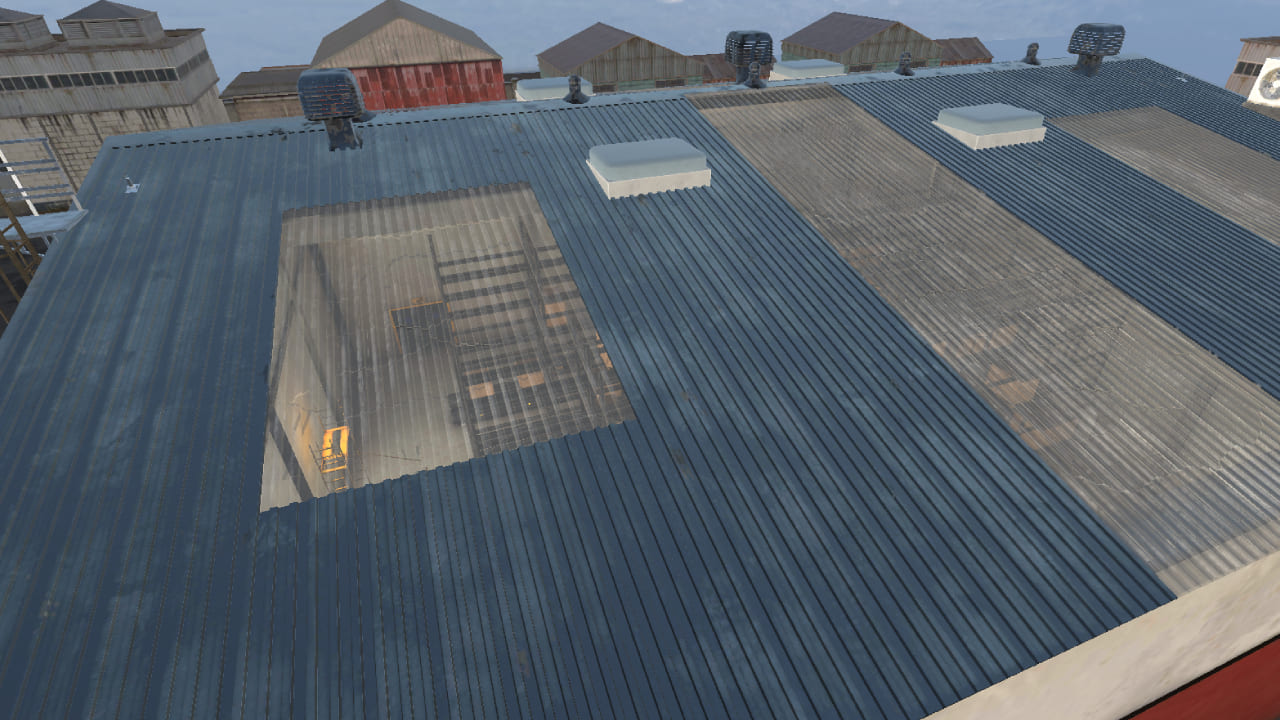
- Inspection of roof lifelines: Simulation of movement across roofs and metal structures to check anchor points.
- Use of lifting platforms and scaffolding: Techniques for erecting and operating machinery at height, learning to identify safety hazards immediately.
- Telecommunications: simulation of work on towers and masts, where the risks and environmental conditions are particularly challenging.
- Industry and maintenance: work on elevated structures, machinery inspections or access to hard-to-reach areas.
Furthermore, these environments can be customised to replicate conditions specific to each company: from the type of installation to environmental factors such as wind, altitude or visibility.
Benefits of incorporating VR into your occupational health and safety plan
Incorporating virtual reality simulators into occupational health and safety programmes not only improves the quality of training, but also brings strategic benefits at an organisational level, such as:
- Avoiding critical risks: It allows you to simulate situations of extreme danger without ever putting employees at risk.
- Cost savings: Expenses relating to travel, subsistence allowances and the use of physical equipment that is out of service during training are drastically reduced.
- Time savings: Virtual training can reduce the time needed to resolve real-life incidents by up to 20% thanks to prior training.
- Improved retention: Experiential learning (gamified approach) leads to better retention of safety protocols than traditional methods.
- Full traceability: The assessment platform records every user action, enabling detailed metrics to be monitored and performance to be analysed to verify that objectives have been met.
- Scalability: Once the simulator has been designed, it is possible to train thousands of employees across multiple geographical locations simultaneously.
Frequently asked questions about work-at-height simulators
Is this training course compliant with the regulations?
Yes. Although regulations require a face-to-face component for certain certifications, VR is a complementary tool of significant legal and educational value. It enables the recording and validation of each step for quality control and compliance with internal safety regulations. Furthermore, it facilitates the traceability of all actions carried out by the user, which is essential for health and safety audits.
More and more organisations are incorporating this type of solution into their training programmes, ensuring compliance with current regulations and embracing innovative methodologies.
What equipment is needed?
Our solutions are flexible and accessible. For a fully immersive experience, virtual reality headsets such as the Meta Quest are used. However, thanks to cross-platform access, the training can also be accessed via computers or tablets, adapting to the resources available at each centre.
How long does a training session last?
The duration varies and is determined according to the client’s needs. Generally, the sessions combine a training phase (practical exercises) with guided information sessions and an examination phase (assessment) in which the operator must demonstrate what they have learnt without visual aids.
Can it be adapted to my business?
Absolutely. One of the greatest strengths of virtual reality simulators is their customisability. Scenarios can be designed to replicate real-world work environments, specific processes or the particular risks faced by each company.
Why choose virtual reality for occupational health and safety
Investing in virtual reality for training in working at height is not just an investment in technology; it is an investment in the lives and efficiency of your team. By removing the physical risks involved in learning, we ensure that mistakes become valuable lessons rather than fatal accidents.
At Innoarea, we have successfully delivered over 200 projects, training more than 10,000 employees with our solutions. If you’re looking to cut costs, optimise time and, above all, ensure that every worker returns home safely, virtual training is the way forward. Contact our team and find out how we can create a simulator that’s up to the task.