We live in an age where digital interaction is no longer confined to flat screens. People are looking for immersive, personalised and memorable experiences. This is where extended reality (XR) comes in: a combination of technologies that are transforming the way brands communicate, sell and train.
If you’re wondering exactly what extended reality is, how it works and why so many companies are embracing it in 2025, read on – we’ll explain it to you in a clear and practical way.
What does ‘Extended Reality’ mean?
Extended Reality (XR) is an umbrella term that encompasses three key technologies: Augmented Reality (AR), Virtual Reality (VR) and Mixed Reality (MR). These technologies enable the creation of environments where the physical and digital worlds blend, offering immersive experiences that can be as simple as a filter app or as complex as a full-scale business simulation.
In other words, XR expands the reality we perceive, either by adding layers of information or by immersing us in entirely virtual worlds.
When was the extended reality created?
Although the concept of blending realities is not new, the term ‘extended reality’ began to be used more formally over the last decade, as AR, VR and MR technologies began to mature and converge.
The rise of XR gained momentum with the arrival of more affordable devices (such as the Meta Quest or smartphones with LiDAR), and now, in 2025, we are at a turning point where XR is no longer experimental – it is strategic. It is not just about following a trend; it is about adapting to the new standard of digital interaction.
What is the difference between RA, RV and MR?
- Augmented Reality (AR): Superimposes digital elements (such as text, images or animations) onto the real world. It is used in mobile apps, smart glasses and social media filters. Example: trying on a pair of virtual glasses from home before buying them.
- Virtual Reality (VR): It transports you to a 100 per cent digital environment, where everything you see, hear and experience is computer-generated. It is ideal for simulations, training or immersive brand experiences.
- Mixed Reality (MR): Blends the physical and digital worlds in real time, allowing virtual objects to interact with the real environment. It requires more advanced hardware, but opens up spectacular possibilities for industry, medicine and retail.
How does extended reality work in practice?
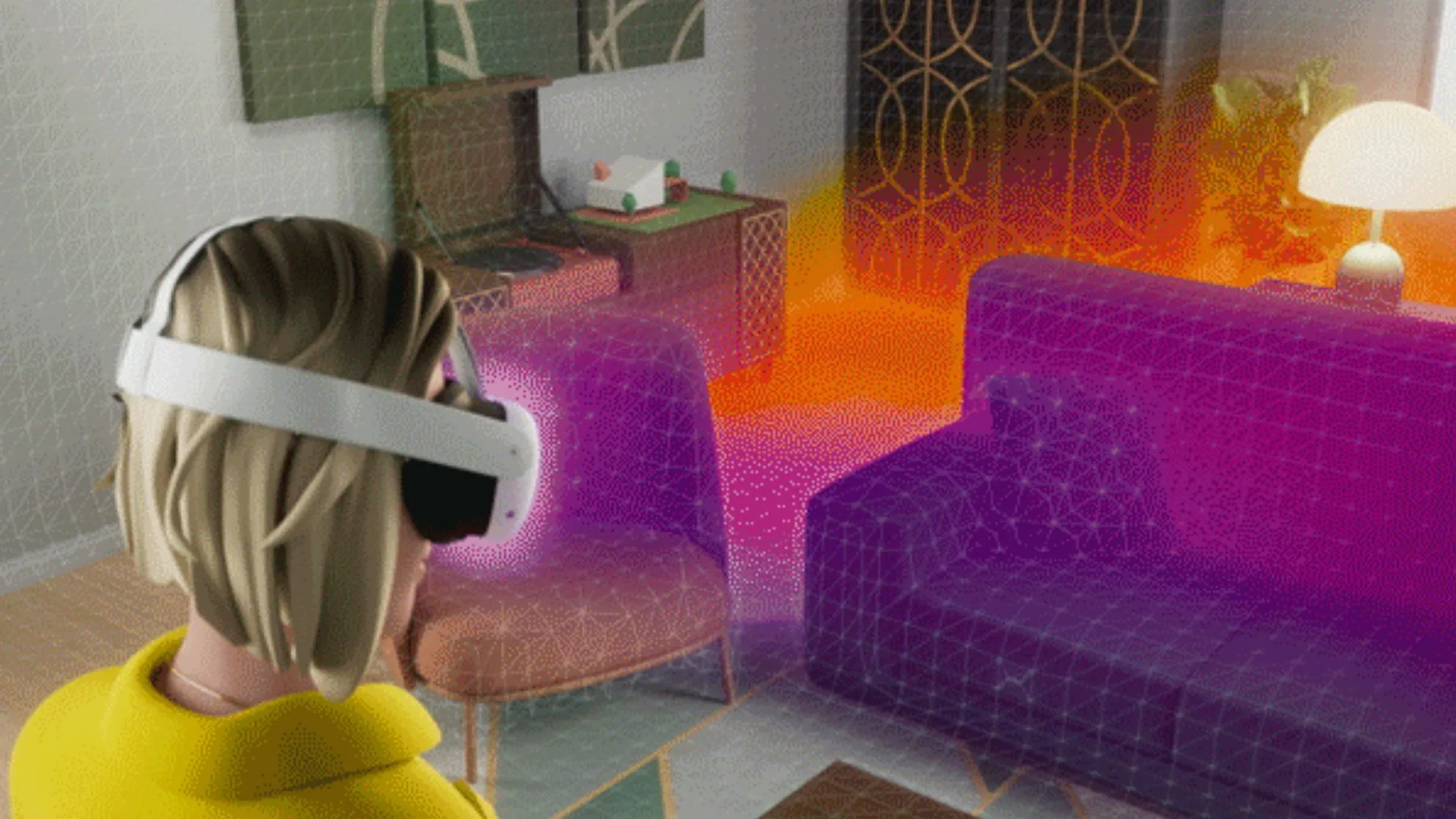
XR works through a combination of hardware (such as virtual reality headsets, mobile phones and sensors) and software (platforms, graphics engines, artificial intelligence and more). The device captures your surroundings or immerses you in a digital environment, whilst the software interprets your movements, the position of objects and even your gestures to create an interactive, real-time experience.
In practice, this makes it possible to do everything from training staff without any risk, to showing clients 3D product models, creating memorable brand experiences, or simulating complex scenarios to inform strategic decision-making.
Why will extended reality be key?
This is the year in which extended reality ceases to be a promise for the future and establishes itself as an essential tool for business innovation. More and more brands are turning to immersive experiences to set themselves apart, improve processes and connect more authentically with their audiences.
Technological trends driving the adoption of XR
As we discussed in our article on Technology Trends 2025, the rapid advancement of artificial intelligence, the roll-out of 5G, the growth of the industrial metaverse and the emergence of lighter and more powerful XR devices are creating the perfect conditions for the widespread adoption of these technologies. Here are some key points:
- More affordable hardware: Devices such as the Apple Vision Pro, Meta Quest 3 and enterprise AR glasses are making XR more widely accessible, offering better performance at a lower cost.
- Generative AI + XR: The combination of artificial intelligence and immersive environments is greatly increasing the creative potential and personalisation of experiences.
- Hybrid working environments: XR is establishing itself as a key solution for remote collaboration, technical training and real-time data visualisation.
- More discerning consumers: Audiences value innovation. Brands that offer interactive, useful and memorable experiences are gaining a competitive edge.
Success stories from leading brands
Major brands are already demonstrating how XR can be a powerful ally in transforming their relationships with customers and employees. Some recent examples:
- IKEA allows users to visualise how furniture would look in their own home using AR on their mobile phones, thereby reducing friction in the purchasing process and the number of returns.
- Porsche uses XR to train its technicians on new vehicle models without needing to have a physical model of each one.
- L’Oréal rolled out AR make-up trial experiences, significantly boosting online conversion rates.
- Siemens integrates XR into industrial environments for simulations, remote maintenance and training in complex environments.
- Nike has developed immersive virtual spaces to launch collections, host events and connect with the community in the metaverse.
These examples show that XR is not just a passing fad, but a strategic development. And the best thing is that it is no longer the preserve of large corporations: today, businesses of all sizes can harness its potential with the right solutions.
What can XR do for your brand?
Integrating extended reality technologies into your strategy is not just about adopting something ‘modern’, but about creating a new language of communication with your customers and teams. A language in which interaction, emotion and immersion replace one-way messages.
XR turns every touchpoint into a meaningful experience, capable of building loyalty, educating, inspiring and driving sales. But how does that translate into real value for your brand?
Immersive experiences that build customer loyalty
Customer loyalty no longer depends solely on product quality or price. Today’s customers value the whole experience: from how they discover your brand to how they interact with it after their purchase. This is where XR makes a difference, offering:
- Personalised virtual tours: guiding the user through a virtual space (a shop, a factory, a brand museum) tailored to their interests.
- 3D or AR product configurators, where customers can visualise in real time how a piece of furniture, a car or an accessory would look in their surroundings.
- Interactive virtual assistants, which provide users with useful information, advice or educational content within an immersive environment.
- After-sales experiences, such as AR tutorials that provide an interactive and engaging way to learn how to use the product.
These experiences create a stronger emotional connection with the brand, encourage repeat purchases, reduce returns and improve the Net Promoter Score (NPS). And, above all, they position you as a company that listens, innovates and pays attention to detail.
The future is immersive: will you join in or be left behind?
Extended reality is no longer science fiction; it is already here. And by 2026, brands that strategically integrate XR will be one step ahead in terms of innovation, connecting with their audiences and creating value. Whether you’re looking to surprise your customers, optimise internal processes or strengthen your position as an innovative brand, XR is a tool that can make all the difference.
At Innoarea, we have been helping companies implement these technologies in a practical, effective and bespoke way for over a decade. Would you like to explore how XR can transform your brand? Let’s talk. You’re just one immersive experience away.